
Tip Rhinoplasty
Tip Rhinoplasty in Turkey
Tip Rhinoplasty in Turkey may be considered when the nasal tip needs selected reshaping, support, projection, rotation, or refinement. This page explains tip-only planning, cartilage strength, skin thickness, alar rim support, nasal valve function, open and closed approaches, grafts, simulation limits, recovery, records, and cost factors.
What Is Tip Rhinoplasty?
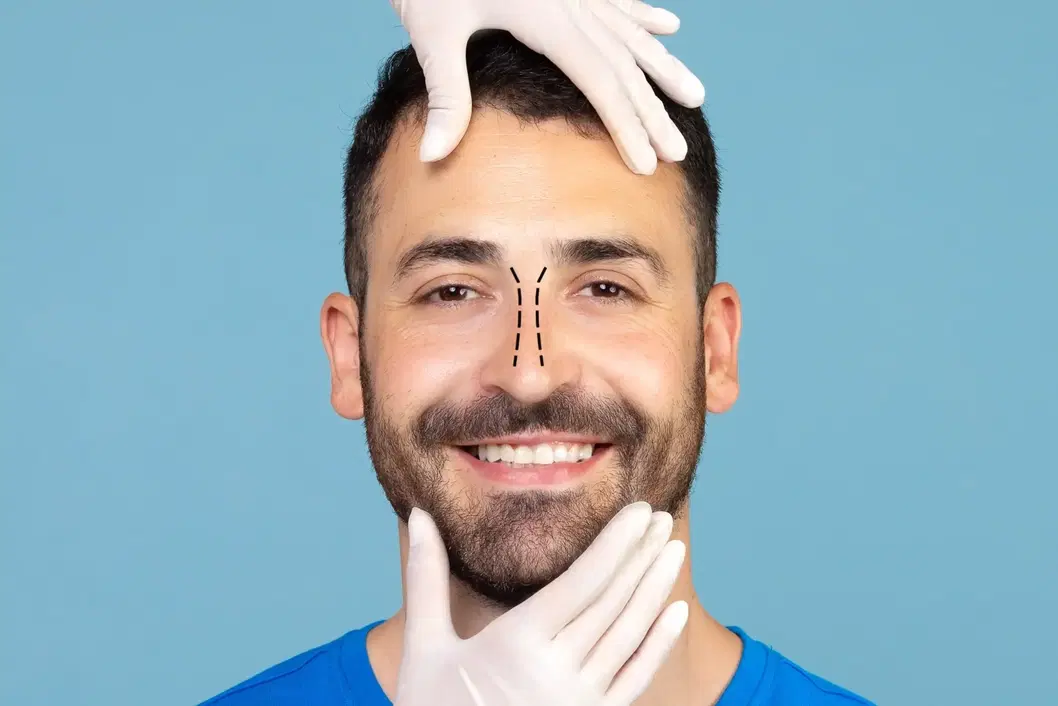
Tip rhinoplasty is nose surgery focused mainly on the nasal tip, rather than the full nasal bridge. It may address a drooping, bulbous, under-projected, over-projected, asymmetric, or poorly supported tip. The surgeon may reshape cartilage, adjust sutures, add grafts, or support the nostril rim. Tip rhinoplasty can be primary or revision surgery. It may also combine with septoplasty or full rhinoplasty when other problems exist. A true tip-only plan should still assess the whole nose. Tip shape depends on skin, cartilage, nostrils, septum, nasal valves, and facial proportions.
Why Is Tip Rhinoplasty Not Always a Small Procedure?
Tip rhinoplasty is not always small because the nasal tip controls both appearance and airflow support. Small cartilage changes can alter nostril shape, tip rotation, projection, and nasal valve function. Some patients need only limited refinement. Others need structural grafts, revision planning, or airway support. This detail is often missing from competitor pages. A tip-only request can become a broader plan if the bridge, septum, valves, or nostrils also contribute. Patients should ask whether their concern is truly isolated. The surgeon should explain what will change and what should remain untouched.
Which Questions Should Patients Ask Before Tip Rhinoplasty?
Patients should ask how the plan protects tip shape, nostril support, and breathing.
Is my concern caused by cartilage, skin thickness, nostril shape, or projection?
Will the alar rims and nasal valves be evaluated?
Will sutures, cartilage grafts, or septal support be needed?
How will swelling, asymmetry, and follow-up be monitored after surgery?
These questions help patients compare clinical reasoning, not package language. A responsible consultation should avoid guarantees and exact-photo promises.
How Do Tip Projection and Rotation Affect Facial Balance?
Tip projection and rotation affect facial balance because they shape how the nose relates to the lips and profile. Projection describes how far the tip extends from the face. Rotation describes the tip angle and upward or downward position. Too much change can create an unnatural look or expose nostril asymmetry. Too little change may not address the patient’s concern. The surgeon should assess profile, front view, smile changes, nostril show, chin relationship, and skin behavior. Reference photos can support discussion, but anatomy decides limits. The goal should be proportional planning, not copying another nose.
Why Do Skin Thickness and Cartilage Strength Matter?
Skin thickness and cartilage strength matter because they control how tip changes appear externally. Thick skin can hide small refinements and may swell longer. Thin skin can show minor cartilage irregularities more easily. Weak cartilage may need support to maintain projection, rotation, and nostril shape. Strong cartilage may require different reshaping methods. This is one of the most important missing details online. A narrow-looking simulation may not match what the skin can show. The surgeon should explain whether the plan is limited by skin envelope, cartilage strength, scarring, or previous surgery.
Which Anatomical Details Can Change the Tip Plan?
Several anatomical details can change whether tip rhinoplasty alone is appropriate.
Thick skin can limit fine definition and prolong swelling discussions.
Weak lower lateral cartilage can require structural support.
Alar rim weakness can affect nostril shape and valve function.
A deviated septum can change tip position and breathing symptoms.
These findings do not automatically prevent surgery. They help define technique, limits, risk discussion, and whether broader nasal work is needed.
How Are Cartilage Sutures and Grafts Used?
Cartilage sutures and grafts are used to reshape or support the nasal tip when clinically appropriate. Sutures can refine cartilage position, width, rotation, or symmetry. Grafts can add strength, projection, rim support, or definition. Septal cartilage may be used when available. Ear or rib cartilage may be discussed in selected revision or structural cases. Grafts are not decorative extras. They should answer a specific support problem. Over-resection can weaken the tip and affect breathing. Patients should ask which cartilage will be reshaped, preserved, reinforced, or borrowed from another area.
Why Must Nasal Valve Function Be Checked?
Nasal valve function must be checked because tip reshaping can affect airflow through the nostrils. The external nasal valve includes the nostril rim and lower sidewall support. Weakness can cause collapse during inspiration. Narrowing the tip without support can worsen airflow in selected patients. Internal valve issues, septal deviation, and turbinate enlargement may also contribute to obstruction. Tip rhinoplasty should not ignore breathing because the tip helps hold the nasal entrance open. Patients should ask whether valve collapse is present and whether alar support or broader functional surgery is needed.
Can Tip Rhinoplasty Be Done Without Changing the Bridge?
Tip rhinoplasty can be done without bridge changes only when the bridge already fits the facial and nasal plan. Some patients have an isolated tip concern. Others have a hump, crooked bridge, wide bones, or middle vault issue that affects overall balance. Changing only the tip can make an untreated bridge look more noticeable. Bridge preservation may be appropriate when it supports natural proportions. The surgeon should show how the tip and dorsum interact from front, profile, and base views. A limited plan should be chosen because it fits anatomy, not because it sounds easier.
How Do Open and Closed Tip Rhinoplasty Differ?
Open and closed tip rhinoplasty differ by incision placement and surgical exposure. Open surgery uses internal incisions plus a small incision across the columella. It can provide wider visibility for complex tip sutures, grafting, asymmetry, or revision work. Closed surgery uses internal incisions only and may suit selected tip refinements. Neither method is automatically better for every patient. The approach should depend on anatomy, goals, cartilage strength, skin thickness, airway concerns, and surgeon assessment. Patients should ask why one method fits their case. The label alone does not define quality.
When Is Revision Tip Rhinoplasty Discussed?
Revision tip rhinoplasty is discussed when previous surgery leaves tip asymmetry, collapse, drooping, stiffness, or dissatisfaction. It can be more complex because scar tissue changes normal layers. Septal cartilage may already be missing. The skin envelope may be less flexible. The nasal valves or alar rims may also need support. Revision surgery should not be rushed while swelling continues to change, unless urgent medical concerns exist. Patients should bring old operative notes and photographs when available. The surgeon should identify whether the problem is cartilage loss, scar contraction, airway weakness, or expectation mismatch.
Why Are Photo Simulation and Social Media Results Limited?
Photo simulation and social media results are limited because they cannot predict healing or tissue behavior. Simulation can help communication, but it is not a promise. Lighting, camera angle, editing, facial expression, swelling, and skin thickness change the perceived tip. A sharp tip in a reference image may not suit another patient’s cartilage or skin. Social media also rarely shows long-term breathing function or revision context. Patients should use images to describe preferences, not demand duplication. The surgeon should explain which requested changes are feasible, uncertain, or not advisable.
What Risks and Limits Should Be Discussed?
Risks and limits should be discussed because tip rhinoplasty can affect appearance, breathing, sensation, and comfort. Possible concerns include bleeding, infection, swelling, scarring, numbness, asymmetry, nostril change, persistent droop, over-rotation, undercorrection, valve weakness, dissatisfaction, or further surgery. Grafts can add visibility, stiffness, warping, or donor-site considerations in selected cases. Medical risks depend on smoking, medicines, bleeding history, allergies, previous surgery, and general health. Surgery can refine structure without eliminating every asymmetry. Patients should ask which risks apply to their nose and which symptoms need urgent contact.
How Should Recovery Be Planned?
Recovery should be planned because nasal tip swelling can last longer than early bruising. Patients may have tapes, splints, internal supports, prescribed medicines, or nasal care instructions. They may need limits on exercise, glasses pressure, swimming, sun exposure, contact sports, and nose blowing. The tip may look stiff, rounded, or swollen during early healing. International patients should confirm early postoperative checks before return travel. They should also know who handles bleeding, fever, severe blockage, trauma, wound problems, or unexpected pain after returning home. Written instructions should guide medicines, restrictions, and follow-up.
What Records Should International Patients Prepare?
International patients should prepare records that show nasal history, breathing symptoms, and previous procedures. Useful files include previous operation notes, photos before earlier surgery, CT reports, endoscopy findings, allergy history, trauma records, medication lists, and filler history. Patients should disclose smoking, blood thinners, bleeding disorders, steroid injections, nasal implants, and prior nasal procedures. Breathing symptoms should be described by side, sleep effect, exercise effect, seasonal pattern, and response to sprays. Translated summaries can reduce delays. Complete records help assess tip support, graft needs, airway findings, scar risk, and realistic planning.
Which Turkey-Specific Health Tourism Rules Matter?
Turkey-specific health tourism rules require tip rhinoplasty information to stay factual, transparent, and non-misleading. Health service promotion should not create demand through guarantees, superiority claims, pressure, or unsupported outcome statements. International health tourism services also involve authorization rules for healthcare facilities and intermediary organizations. Patients may ask whether the provider is authorized for international health tourism. They should request clear information about surgeon evaluation, procedure scope, consent, interpreter support, privacy, postoperative care, records, and follow-up communication. This page avoids price promises, comparative savings language, result guarantees, and unsupported surgeon or clinic superiority statements.
What Should Patients Know About Tip Rhinoplasty in Turkey Cost 2026?
Tip Rhinoplasty in Turkey Cost 2026 can vary by anatomy, procedure scope, graft needs, airway findings, and follow-up planning. A responsible cost explanation should not use cheapness claims, savings comparisons, or pressure language. The final amount may depend on consultation, nasal evaluation, imaging when needed, tip sutures, cartilage grafting, alar rim support, septoplasty, valve repair, revision complexity, anesthesia, hospital pathway, medicines, splints, translation, and postoperative visits. Patients should request written, patient-specific information before travel or booking. Prices should not be presented as a reason to choose surgery. Medical suitability, airway assessment, realistic goals, and risk discussion should come first.
References
NCBI Bookshelf — Rhinoplasty Tip-Shaping Surgery: https://www.ncbi.nlm.nih.gov/books/NBK567750/
AAO-HNS — Clinical Practice Guideline: Improving Nasal Form and Function after Rhinoplasty: https://www.entnet.org/quality-practice/quality-products/clinical-practice-guidelines/improving-nasal-form-and-function-after-rhinoplasty/
AAO-HNS — Clinical Practice Guideline Executive Summary: Improving Nasal Form and Function after Rhinoplasty: https://aao-hnsfjournals.onlinelibrary.wiley.com/doi/10.1177/0194599816683156
AAO-HNS — Position Statement: Nasal Valve Repair: https://www.entnet.org/resource/position-statement-nasal-valve-repair/
AAO-HNS — Clinical Indicators: Rhinoplasty: https://www.entnet.org/resource/clinical-indicators-rhinoplasty/
American Society of Plastic Surgeons — Rhinoplasty: https://www.plasticsurgery.org/cosmetic-procedures/rhinoplasty
American Society of Plastic Surgeons — Rhinoplasty Candidates: https://www.plasticsurgery.org/cosmetic-procedures/rhinoplasty/candidates
American Society of Plastic Surgeons — Rhinoplasty Preparation: https://www.plasticsurgery.org/cosmetic-procedures/rhinoplasty/preparation
American Society of Plastic Surgeons — Rhinoplasty Risks and Safety: https://www.plasticsurgery.org/cosmetic-procedures/rhinoplasty/safety
Cleveland Clinic — Rhinoplasty: https://my.clevelandclinic.org/health/treatments/11011-rhinoplasty
Cleveland Clinic — Septoplasty: https://my.clevelandclinic.org/health/treatments/17779-septoplasty
T.C. Sağlık Bakanlığı — Regulation on International Health Tourism and Tourist Health: https://shgmturizmdb.saglik.gov.tr/EN-108974/regulation-on-international-health-tourism-and-tourist-health.html
T.C. Sağlık Bakanlığı — Health Tourism Regulations: https://shgmturizmdb.saglik.gov.tr/EN-107627/regulations.html
T.C. Sağlık Bakanlığı — Certified Healthcare Providers and Certified Facilitators: https://healthturkiye.gov.tr/certificated-health-service-providers
T.C. Sağlık Bakanlığı — Sağlık Hizmetlerinde Tanıtım ve Bilgilendirme Faaliyetleri Hakkında Yönetmelik: https://antalyaism.saglik.gov.tr/TR-366500/saglik-hizmetlerinde-tanitim-ve-bilgilendirme--faaliyetleri-hakkinda-yonetmelik.html