

Revision Rhinoplasty
Revision Rhinoplasty in Turkey
Revision Rhinoplasty in Turkey may be considered when breathing, shape, support, asymmetry, scar tissue, or previous surgical changes need reassessment. This page explains timing, airway evaluation, nasal valve problems, septal cartilage loss, ear or rib grafts, skin thickness, imaging, expectations, risks, recovery, records, and cost factors.
What Is Revision Rhinoplasty?
Revision rhinoplasty is nose surgery performed after one or more previous nasal operations. It may address appearance concerns, breathing problems, structural collapse, asymmetry, scar tissue, or graft-related issues. Some patients need small corrections. Others need major reconstruction using cartilage support. The surgeon must understand what changed during earlier surgery. Old septal cartilage may be missing, scar tissue may distort anatomy, and skin may respond differently. Revision rhinoplasty is not simply repeating primary rhinoplasty. A careful plan should explain the problem, the limits, the technique, and the follow-up pathway.
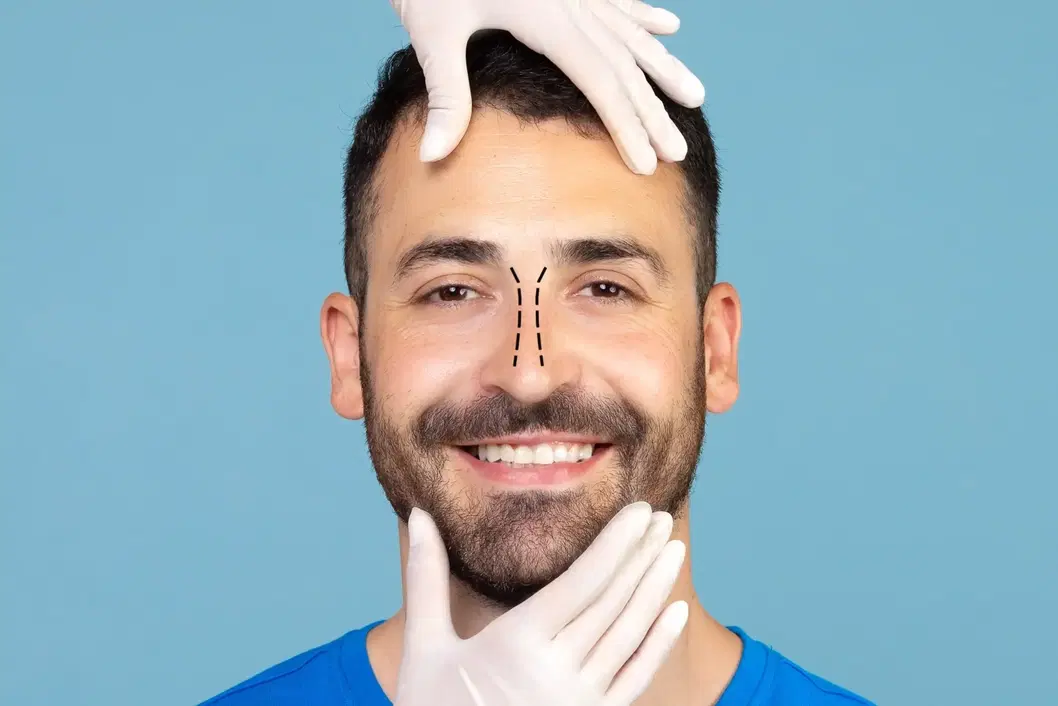
Why Is Revision Rhinoplasty More Complex Than Primary Rhinoplasty?
Revision rhinoplasty is more complex because previous surgery changes anatomy, support, and healing behavior. Scar tissue can make tissue planes harder to separate. Cartilage may have been removed, weakened, or repositioned. The septum may not provide enough graft material. Breathing problems may involve internal or external nasal valve collapse. Skin thickness and swelling can also limit visible refinement. This detail is often missing from competitor pages. Patients should ask what is structurally possible, not only what looks desirable. The surgeon should separate cosmetic goals from airway and support problems.
Which Questions Should Patients Ask Before Revision Rhinoplasty?
Patients should ask how the plan addresses the cause of the previous problem.
Is the main concern airway, shape, support, scar tissue, or expectation mismatch?
Is enough septal cartilage available, or will ear or rib cartilage be discussed?
Will the nasal valves, septum, turbinates, and skin envelope be assessed?
What follow-up, swelling timeline, and revision limits should be expected?
These questions help patients compare medical reasoning, not marketing language. A responsible answer should avoid guarantees, pressure, and exact-result promises.
When Should Revision Rhinoplasty Be Considered?
Revision rhinoplasty should be considered only after the nose has been properly evaluated and healing is mature enough. Swelling after rhinoplasty can change slowly, especially around the nasal tip. Early concerns may improve without another operation. However, severe breathing obstruction, infection, trauma, or structural problems may need earlier medical attention. The decision depends on symptoms, examination, previous surgery, healing stage, and patient goals. A second operation should not be rushed for a photo-based concern alone. The surgeon should identify whether the issue is anatomical, functional, scar-related, or expectation-related.
Why Does Airway Assessment Matter in Revision Cases?
Airway assessment matters because revision patients may have hidden structural causes of obstruction.
Nasal valve collapse can restrict airflow during inspiration.
Septal deviation or perforation can affect airflow and crusting.
Turbinate enlargement can contribute to blocked breathing.
Prior surgery may weaken tip, middle vault, or sidewall support.
Breathing symptoms should not be treated as a minor detail. Shape correction that ignores airflow can leave the main complaint unresolved.
How Do Nasal Valves Change the Surgical Plan?
Nasal valves change the plan because they are narrow airflow areas that need structural support. The internal nasal valve sits near the septum and upper lateral cartilage. The external valve involves the nostril rim and lower sidewall support. Collapse can appear after over-resection, trauma, weak cartilage, or scar contraction. Valve repair may require spreader grafts, batten grafts, sutures, or other support techniques. Septoplasty alone may not solve valve collapse. This point is frequently underexplained online. Patients should ask whether valve compromise is present and how it will be corrected if clinically relevant.
Why Is Cartilage Grafting Often Discussed?
Cartilage grafting is often discussed because revision surgery may need to rebuild lost nasal support. Septal cartilage is commonly useful in rhinoplasty, but previous surgery can reduce availability. Ear cartilage may help selected areas that need curved support. Rib cartilage may be considered when stronger or larger graft material is needed. Each donor site has its own tradeoffs, including scar, shape, stiffness, and healing considerations. Donor cartilage choice should not be automatic. The surgeon should explain why grafting is needed, where cartilage may come from, and what limits apply.
How Do Scar Tissue and Skin Thickness Affect Results?
Scar tissue and skin thickness affect results because they can limit definition and predictability. Scar tissue may pull, stiffen, or distort nasal tissues after the first operation. Thick skin can hide small refinements and swell longer. Thin skin can reveal minor irregularities more easily. A revision plan must work with the existing skin envelope, not against it. This detail is often missing from promotional pages. Patients should understand that surgery changes structure, while skin healing controls how changes appear. Realistic counseling should address swelling, scar behavior, and visible limitations.
How Do Imaging and Internal Examination Help Planning?
Imaging and internal examination help planning when breathing symptoms, trauma, or complex anatomy need clarification. The surgeon may use anterior rhinoscopy, nasal endoscopy, photographs, and physical examination. CT imaging may be considered when sinus disease, trauma, or complex septal anatomy is relevant. Imaging is not required for every patient. It should answer a defined clinical question. Old operative notes and previous photographs can be more useful than edited pictures. The evaluation should identify support loss, septal status, valve function, turbinate contribution, scars, implants, grafts, and skin quality before surgery is scheduled.
What Should Patients Know About Photo Simulation?
Photo simulation can support communication, but it cannot guarantee the final result. Digital images depend on angle, lighting, software, swelling, skin behavior, and anatomy. A simulated profile may not show airway consequences or structural limits. Reference photos can help describe preferences, but another person’s nose cannot be copied reliably. Revision patients need extra caution because scar tissue and graft needs reduce predictability. This point is often overlooked online. Patients should ask which requested changes are feasible, uncertain, or not advisable. Consent should focus on realistic goals rather than exact image matching.
When Is Psychological Readiness Relevant?
Psychological readiness is relevant because revision rhinoplasty can carry strong emotional expectations. Patients may feel frustrated after previous surgery. They may focus on small asymmetries, changing swelling, or edited images. A responsible consultation should explore goals, distress level, expectations, and decision pressure. This does not dismiss patient concerns. It helps match the surgical plan with realistic and healthy expectations. Surgery may be delayed when expectations cannot be matched by anatomy. Patients should feel able to ask questions and decline treatment. Clear counseling protects informed consent and reduces rushed decisions.
What Risks and Limits Should Be Discussed?
Risks and limits should be discussed because revision rhinoplasty can affect appearance, breathing, sensation, and comfort. Possible concerns include bleeding, infection, swelling, scarring, numbness, asymmetry, breathing difficulty, septal perforation, skin problems, graft visibility, graft warping, dissatisfaction, or another operation. Donor-site cartilage can add separate risks. Anesthesia and medical conditions also matter. Risk varies by previous surgery, smoking, trauma, skin thickness, scar tissue, graft needs, and healing response. Patients should ask which risks apply to their case. Consent should include alternatives, uncertainty, follow-up needs, and realistic limitations.
How Should Recovery Be Planned After Revision Surgery?
Recovery should be planned carefully because revision swelling and scar behavior can evolve slowly. Patients may have splints, tapes, internal supports, or prescribed medicines. They may need limits on nose blowing, exercise, glasses pressure, swimming, sun exposure, and contact sports. Breathing can fluctuate during early healing. Tip definition may change gradually. International patients should confirm early postoperative visits before return travel. They should also know who handles bleeding, fever, trauma, wound problems, or breathing concerns after returning home. Written instructions should explain medicines, warning signs, activity limits, and follow-up communication.
What Records Should International Patients Prepare?
International patients should prepare detailed records from every previous nasal procedure. Useful files include operative notes, preoperative photographs, postoperative photographs, CT reports, allergy history, medication lists, implant or graft details, and complication records. Patients should disclose fillers, threads, steroid injections, trauma, smoking, blood thinners, bleeding disorders, and breathing symptoms. Symptoms should be described by side, timing, sleep effect, exercise effect, allergy triggers, and seasonal changes. Translated summaries can reduce delays. Complete records help the surgeon assess available cartilage, scar risk, airway causes, revision complexity, and whether surgery should proceed.
Which Turkey-Specific Health Tourism Rules Matter?
Turkey-specific health tourism rules require revision rhinoplasty information to stay factual, transparent, and non-misleading. Health service promotion should not create demand through guarantees, superiority claims, pressure, or unsupported outcome statements. International health tourism services also involve authorization rules for healthcare facilities and intermediary organizations. Patients may ask whether the provider is authorized for international health tourism. They should request clear information about surgeon evaluation, procedure scope, consent, interpreter support, privacy, records, postoperative care, and follow-up communication. This page avoids price promises, comparative savings language, success claims, and unsupported surgeon or clinic superiority statements.
What Should Patients Know About Revision Rhinoplasty in Turkey Cost 2026?
Revision Rhinoplasty in Turkey Cost 2026 can vary by patient needs, previous surgery, graft requirements, and airway planning. A responsible cost explanation should not use cheapness claims, savings comparisons, or pressure language. The final amount may depend on consultation, endoscopy, imaging when needed, revision complexity, septoplasty, valve repair, turbinate treatment, ear or rib cartilage grafting, anesthesia, hospital pathway, medicines, splints, translation, and postoperative visits. Patients should request written, patient-specific information before travel or booking. Prices should not be presented as a reason to choose surgery. Medical suitability, airway assessment, realistic goals, and risk discussion should come first.
References
American Society of Plastic Surgeons — Understanding Revision Rhinoplasty: https://www.plasticsurgery.org/news/blog/understanding-revision-rhinoplasty-and-why-patients-seek-out-this-procedure
American Society of Plastic Surgeons — Rhinoplasty: https://www.plasticsurgery.org/cosmetic-procedures/rhinoplasty
American Society of Plastic Surgeons — Rhinoplasty Risks and Safety: https://www.plasticsurgery.org/cosmetic-procedures/rhinoplasty/safety
Cleveland Clinic — Rhinoplasty: https://my.clevelandclinic.org/health/treatments/11011-rhinoplasty
Cleveland Clinic — Septoplasty: https://my.clevelandclinic.org/health/treatments/17779-septoplasty
AAO-HNS — Clinical Practice Guideline: Improving Nasal Form and Function after Rhinoplasty: https://www.entnet.org/quality-practice/quality-products/clinical-practice-guidelines/improving-nasal-form-and-function-after-rhinoplasty/
AAO-HNS — Position Statement: Nasal Valve Repair: https://www.entnet.org/resource/position-statement-nasal-valve-repair/
AAO-HNS — Clinical Indicators: Septoplasty: https://www.entnet.org/resource/clinical-indicators-septoplasty/
PubMed Central — Grafting in Revision Rhinoplasty: https://pmc.ncbi.nlm.nih.gov/articles/PMC3709529/
PubMed Central — Revision Rhinoplasty Assessment Classification: https://pmc.ncbi.nlm.nih.gov/articles/PMC8186987/
T.C. Sağlık Bakanlığı — Regulation on International Health Tourism and Tourist Health: https://shgmturizmdb.saglik.gov.tr/EN-108974/regulation-on-international-health-tourism-and-tourist-health.html
T.C. Sağlık Bakanlığı — Health Tourism Regulations: https://shgmturizmdb.saglik.gov.tr/EN-107627/regulations.html
T.C. Sağlık Bakanlığı — Certified Healthcare Providers and Certified Facilitators: https://healthturkiye.gov.tr/certificated-health-service-providers
T.C. Sağlık Bakanlığı — Sağlık Hizmetlerinde Tanıtım ve Bilgilendirme Faaliyetleri Hakkında Yönetmelik: https://www.lexpera.com.tr/resmi-gazete/metin/saglik-hizmetlerinde-tanitim-ve-bilgilendirme-faaliyetleri-hakkinda-yonetmelik-33075