
Strabismus Surgery
Strabismus Surgery in Turkey
Strabismus Surgery in Turkey may be considered for selected children or adults with eye misalignment after a detailed eye examination. This page explains diagnosis, measurement, amblyopia, double vision, glasses, prisms, eye muscle surgery, adjustable sutures, recovery, records, and cost factors. It highlights verifiable details many pages miss.
What Is Strabismus Surgery?
Strabismus surgery adjusts selected eye muscles to improve eye alignment when clinically appropriate. The surgeon may weaken, strengthen, or reposition one or more muscles. The procedure can involve one eye or both eyes. It may be used for inward, outward, upward, downward, paralytic, restrictive, or complex deviations. Surgery does not remove the eye from the socket. It also does not directly change the glasses prescription. The goal depends on age, symptoms, binocular vision, double vision, head posture, and measurements. A clear plan should explain which muscles are involved and why.
Why Is Strabismus Not Only a Cosmetic Issue?
Strabismus is not only a cosmetic issue because it can affect vision, depth perception, comfort, and function. In children, misalignment can contribute to amblyopia when one eye is underused. In adults, strabismus can cause double vision, eye strain, social discomfort, or abnormal head posture. Some cases relate to thyroid eye disease, stroke, trauma, nerve palsy, high myopia, or previous eye surgery. This detail is often missing from competitor pages. The evaluation should identify whether the main problem is alignment, vision development, diplopia control, nerve function, restriction, or a combined issue.
Which Symptoms Should Prompt Strabismus Evaluation?
Eye turning, double vision, head tilt, or poor depth perception should prompt strabismus evaluation.
A child may close one eye, tilt the head, or lose fixation.
An adult may notice double vision, eye strain, or drifting eyes.
Sudden new misalignment can need neurological or urgent medical review.
Vision difference between eyes may suggest amblyopia or another eye disease.
These signs do not automatically mean surgery is needed. They help the doctor choose glasses, patching, prisms, observation, imaging, or surgery review.
How Is Strabismus Measured Before Surgery?
Strabismus is measured by testing eye alignment at different distances and gaze positions. The ophthalmologist may use cover tests, prism measurements, motility testing, refraction, and binocular vision assessment. Measurements may change with fatigue, glasses, fixation distance, or neurological status. Children may need repeat visits because cooperation and vision development matter. Adults may need diplopia mapping when double vision is present. This is a key missing detail online. One quick measurement is not always enough for surgical planning. The surgeon should confirm deviation type, size, variability, and muscle pattern before recommending surgery.
Why Must Amblyopia Be Checked in Children?
Amblyopia must be checked because surgery cannot fully replace vision development treatment in children. Amblyopia happens when the brain favors one eye and visual development weakens in the other. Treatment may involve glasses, patching, atropine drops, or treating the cause. Eye muscle surgery may align the eyes, but it does not automatically restore reduced vision. Timing matters because treatment response can be better in childhood. Parents should ask whether visual acuity is equal and whether amblyopia therapy is needed before or after surgery. This prevents unrealistic expectations about alignment and vision.
When Are Glasses, Prisms, or Observation Considered First?
Glasses, prisms, or observation may be considered first when they fit the cause and symptoms.
Glasses may reduce some deviations linked with farsightedness.
Prisms may help selected patients with double vision.
Patching or drops may treat amblyopia in children.
Observation may be used when deviation is small, changing, or recently developed.
Non-surgical care does not mean surgery is unnecessary forever. It means treatment should match the cause, age, symptoms, and measurement stability.
How Does Adult Strabismus Differ From Childhood Strabismus?
Adult strabismus differs because the brain and visual system have already developed. Adults may have childhood strabismus that returned, or new misalignment from disease or injury. Double vision is more common in adults with recent-onset strabismus. Some adults seek care for reading difficulty, depth perception, work function, or head posture. The evaluation may include medical history, neurological review, thyroid eye disease assessment, or previous surgery records. Surgery may be discussed, but planning must include diplopia risk. Adult goals should be stated clearly. Alignment improvement and binocular comfort are not identical outcomes.
What Is Adjustable Suture Strabismus Surgery?
Adjustable suture surgery allows selected eye muscle positions to be fine-tuned after the operation. The surgeon places a suture that can be adjusted during early postoperative assessment. This option is often discussed more in cooperative adults than young children. It may be considered in reoperations, restrictive strabismus, paralytic strabismus, or less predictable cases. Adjustable sutures do not guarantee perfect alignment. They also may add discomfort, anxiety, or extra assessment steps. Patients should ask whether this technique fits their case. The answer should depend on diagnosis, cooperation, surgeon judgment, and expected variability.
What Happens During Eye Muscle Surgery?
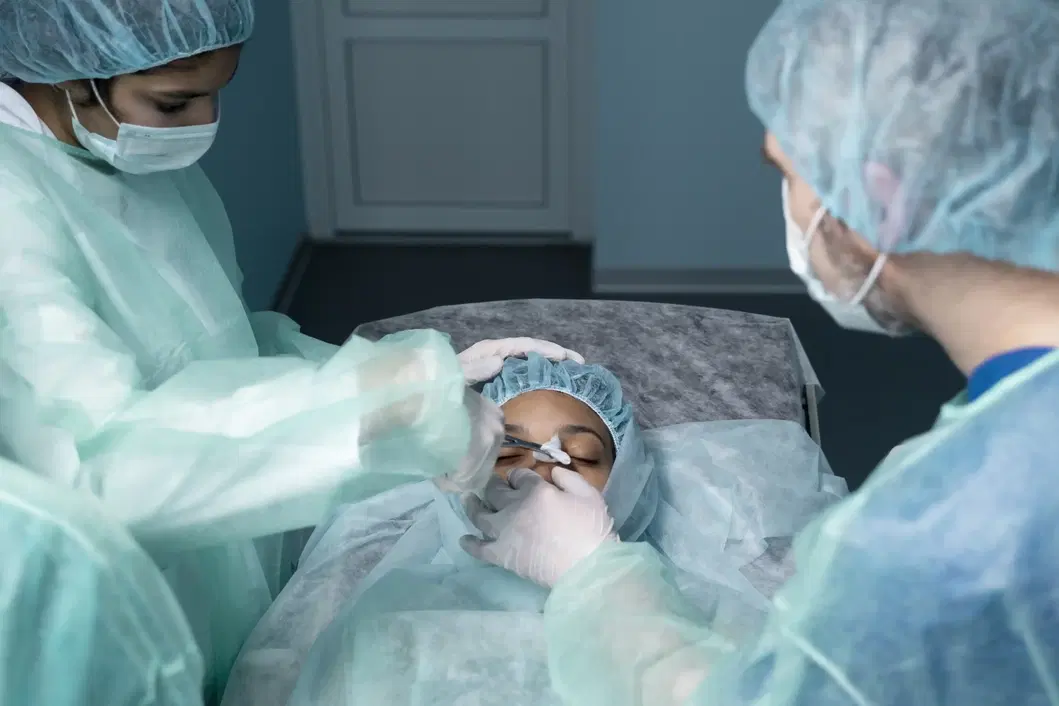
During eye muscle surgery, the surgeon reaches the eye muscles through the conjunctiva. The muscle can be moved backward, shortened, advanced, or repositioned depending on the plan. General anesthesia is common in children. Adults may have different anesthesia options depending on case and protocol. The eye is not removed during the operation. Stitches usually stay on the eye surface and dissolve or are managed as planned. Some patients have both eyes operated on. The surgeon should explain the muscles, target deviation, anesthesia, postoperative drops, activity limits, and follow-up schedule before consent.
What Risks and Limits Should Be Discussed?
Risks and limits should be discussed because eye alignment can change after surgery. Possible concerns include undercorrection, overcorrection, double vision, infection, bleeding, inflammation, scarring, slipped muscle, limited movement, or need for further surgery. Rare complications can affect vision. Risk varies by age, diagnosis, previous surgery, muscle restriction, neurological cause, and measurement stability. Some patients need glasses, prisms, patching, or additional treatment after surgery. This section should not use guarantee language. Patients should ask which risks apply to their condition and which symptoms need urgent contact after discharge.
Why Can Double Vision Occur After Surgery?
Double vision can occur after surgery because the brain must adapt to a new eye position. Adults with long-standing strabismus may suppress one eye. Others may develop diplopia when alignment changes. The risk depends on preoperative sensory testing, deviation type, age of onset, and prior binocular vision. Prism testing or simulation may help selected patients understand risk. Double vision can be temporary, persistent, or require further management. This is often underexplained on promotional pages. Patients should ask how diplopia risk is assessed before surgery and what options exist if symptoms occur.
How Should Recovery and Follow-Up Be Planned?
Recovery and follow-up should be planned because alignment, redness, and comfort can change after surgery. Patients may use prescribed drops or ointment. Redness, tearing, foreign body sensation, and mild discomfort can occur. Follow-up checks assess healing, infection signs, eye movement, and alignment. Some patients need later adjustment, prisms, glasses, or another procedure discussion. Children still need amblyopia and vision monitoring. Adults should report new or worsening double vision. International patients should not rely only on travel dates. They should confirm early postoperative review, emergency contact, and local follow-up before returning home.
What Records Should International Patients Bring?
International patients should bring records that show diagnosis, measurements, vision history, and previous treatment. Useful files include old strabismus measurements, glasses prescriptions, amblyopia treatment records, prism trials, previous surgery notes, neurological records, thyroid eye disease tests, imaging, and eye reports. Children should bring pediatric eye records when available. Adults should describe double vision direction, timing, triggers, and previous head posture. Photos can help show long-term eye position changes. Translated summaries can reduce delays. Complete records help the surgeon decide whether observation, glasses, prisms, further testing, or surgery should be discussed.
Which Turkey-Specific Health Tourism Rules Matter?
Turkey-specific health tourism rules require strabismus surgery information to stay factual, transparent, and non-misleading. Health service promotion should not create demand through guarantees, superiority claims, pressure, or unsupported outcome statements. International health tourism services also involve authorization rules for healthcare facilities and intermediary organizations. Patients may ask whether the provider is authorized for international health tourism. They should request clear information about examination scope, surgical plan, consent, interpreter support, privacy, postoperative care, records, and follow-up communication. This page avoids price promises, comparative savings language, success claims, and unsupported technology superiority statements.
What Should Patients Know About Strabismus Surgery in Turkey Cost 2026?
Strabismus Surgery in Turkey Cost 2026 can vary by patient age, diagnosis, surgical complexity, and follow-up needs. A responsible cost explanation should not use cheapness claims, savings comparisons, or pressure language. The final amount may depend on consultation, measurements, refraction, sensory testing, anesthesia, one-eye or two-eye surgery, muscle number, adjustable sutures, medicines, postoperative visits, translation, and additional evaluations. Patients should request written, patient-specific information before travel or booking. Prices should not be presented as a reason to choose surgery. Medical indication, measurement stability, diplopia risk, and follow-up planning should come first.
References
American Association for Pediatric Ophthalmology and Strabismus — Adult Strabismus: https://www.aapos.org/patient/patient-resources/adult-strabismus-new
American Association for Pediatric Ophthalmology and Strabismus — Strabismus Surgery: https://www.aapos.org/glossary/strabismus-surgery
American Association for Pediatric Ophthalmology and Strabismus — Adjustable Sutures in Strabismus Surgery: https://patients.aapos.org/glossary/adjustable-sutures-in-strabismus-surgery
American Academy of Ophthalmology — Adult Strabismus Preferred Practice Pattern: https://www.aaojournal.org/article/S0161-6420%2824%2900013-7/fulltext
American Academy of Ophthalmology — Adjustable Sutures in the Treatment of Strabismus: https://pmc.ncbi.nlm.nih.gov/articles/PMC10187043/
National Eye Institute — Amblyopia: https://www.nei.nih.gov/eye-health-information/eye-conditions-and-diseases/amblyopia-lazy-eye
MedlinePlus — Strabismus: https://medlineplus.gov/ency/article/001004.htm
Cleveland Clinic — Strabismus: https://my.clevelandclinic.org/health/diseases/strabismus-eye-misalignment
T.C. Sağlık Bakanlığı — Regulation on International Health Tourism and Tourist Health: https://shgmturizmdb.saglik.gov.tr/EN-108974/regulation-on-international-health-tourism-and-tourist-health.html
T.C. Sağlık Bakanlığı — Health Tourism Regulations: https://shgmturizmdb.saglik.gov.tr/EN-107627/regulations.html
T.C. Sağlık Bakanlığı — Certified Healthcare Providers and Certified Facilitators: https://healthturkiye.gov.tr/certificated-health-service-providers
T.C. Sağlık Bakanlığı — Sağlık Hizmetlerinde Tanıtım ve Bilgilendirme Faaliyetleri Hakkında Yönetmelik: https://www.lexpera.com.tr/resmi-gazete/metin/saglik-hizmetlerinde-tanitim-ve-bilgilendirme-faaliyetleri-hakkinda-yonetmelik-33075