

Laser Eye Surgery
Laser Eye Surgery in Turkey
Laser Eye Surgery in Turkey may be considered for selected people with myopia, hyperopia, or astigmatism after a detailed eye evaluation. This page explains LASIK, PRK, SMILE, prescription stability, corneal thickness, topography, dry eye, pupil size, expectations, recovery, records, and cost factors.
What Is Laser Eye Surgery?
Laser eye surgery reshapes the cornea to change how light focuses on the retina. It may reduce dependence on glasses or contact lenses in selected patients. Common methods include LASIK, PRK, and SMILE. These procedures are used mainly for refractive errors such as myopia, hyperopia, and astigmatism. They do not treat every cause of blurred vision. Cataract, glaucoma, retina disease, keratoconus, dry eye, or optic nerve disease may need different care. The correct plan depends on prescription stability, corneal shape, corneal thickness, eye surface health, age, lifestyle, and expectations.
Why Is Suitability More Important Than the Procedure Name?
Suitability is more important because the same laser method can be appropriate for one eye and unsuitable for another. LASIK, PRK, and SMILE use different surgical designs. LASIK creates a corneal flap. PRK treats the surface after removing the outer layer. SMILE removes a small corneal lenticule through a small incision. These differences affect healing, dry eye risk, corneal strength, discomfort, and recovery planning. This detail is often missing from competitor pages. Patients should not choose by technology names alone. The eye examination must decide whether any laser option fits the person’s cornea and visual goals.
Which Questions Should Patients Ask Before Laser Eye Surgery?
Patients should ask whether their eyes are suitable and which findings support that decision.
Is my prescription stable enough for surgery planning?
Do corneal thickness and topography support laser treatment?
Do I have dry eye, keratoconus risk, or retina findings?
What visual tradeoffs, follow-up visits, and recovery limits should I expect?
These questions support informed consent. They also help patients compare medical reasoning instead of slogans. A clear answer should avoid guarantees, pressure, and unsupported outcome claims.
Who May Not Be a Suitable Candidate?
Some patients may not be suitable because laser surgery can worsen or expose existing eye risks. Unstable prescription, thin cornea, suspicious corneal topography, keratoconus, severe dry eye, active eye inflammation, uncontrolled autoimmune disease, or certain retina risks can change the plan. Pregnancy or breastfeeding may also delay evaluation because refraction can fluctuate. Very high prescriptions may require another approach. Presbyopia can also limit near vision expectations after midlife. This does not mean treatment is impossible for every such patient. It means the ophthalmologist should individualize timing, method, or alternatives.
How Do LASIK, PRK, and SMILE Differ?
LASIK, PRK, and SMILE differ by how the cornea is accessed and reshaped.
LASIK creates a flap, then reshapes corneal tissue underneath.
PRK treats the corneal surface without creating a flap.
SMILE removes a lenticule through a small corneal incision.
Each method has different suitability, healing, and limitation patterns.
None is automatically suitable for every patient. Corneal thickness, topography, dry eye, occupation, contact sports, prescription type, and healing expectations can influence the choice.
Why Are Corneal Topography and Thickness Essential?
Corneal topography and thickness are essential because laser surgery removes or changes corneal tissue. Topography and tomography can reveal irregular shape patterns that a routine glasses test may miss. These findings help screen for keratoconus or other corneal weakness concerns. Corneal thickness helps estimate how much tissue may remain after treatment. A technically possible correction can still be inappropriate if corneal stability is uncertain. This is one of the most important missing details online. Patients should ask whether maps are normal and whether enough residual corneal tissue would remain after the proposed procedure.
How Does Dry Eye Affect Laser Eye Surgery Planning?
Dry eye affects planning because laser procedures can worsen dryness or visual fluctuation in some patients. Symptoms may include burning, stinging, gritty sensation, watering, redness, or blurred vision. Contact lens use, screen habits, eyelid inflammation, medicines, autoimmune conditions, and environment can contribute. Doctors may evaluate tear film, eyelids, corneal staining, and meibomian glands before surgery. Dry eye treatment may be needed before any decision. This point is often underexplained in promotional content. Patients should ask whether dryness is mild, moderate, severe, temporary, or likely to affect recovery and satisfaction.
Why Does Pupil Size and Night Vision History Matter?
Pupil size and night vision history matter because glare, halos, and starbursts can affect some patients after surgery. People who already struggle with night driving should discuss this carefully. Higher prescriptions, large pupils, corneal shape, treatment zone, dry eye, and healing response can influence symptoms. These effects may improve, persist, or require further evaluation depending on the case. A sharp vision chart result does not guarantee comfortable night vision. This practical distinction is often missing from competitor pages. Patients should explain work, driving, screen use, night habits, and tolerance for visual tradeoffs before choosing surgery.
Can Laser Eye Surgery Treat Presbyopia?
Laser eye surgery does not fully reverse natural age-related near focusing loss. Presbyopia usually appears in midlife when the eye lens loses flexibility. Standard laser correction can improve distance focus, but near tasks may still need reading glasses. Some patients discuss monovision, where one eye targets distance and the other targets near vision. This approach requires careful testing because not everyone tolerates it. Lens-based options may be more relevant for selected older patients. Patients should ask how age, cataract risk, near vision goals, and future lens changes affect the plan.
What Happens During the Preoperative Eye Evaluation?
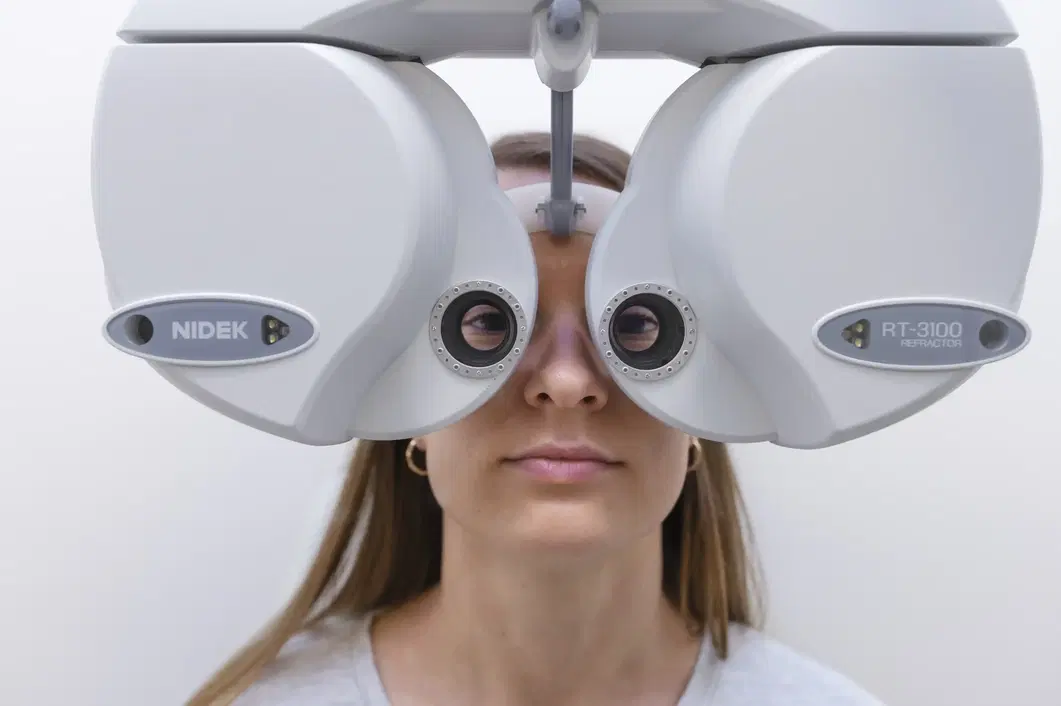
The preoperative evaluation checks whether laser treatment matches the eyes and the patient’s goals. The exam may include refraction, visual acuity, pupil testing, eye pressure, corneal thickness, corneal mapping, dry eye assessment, and dilated retina examination. Contact lenses may need to stop before measurements because they can alter corneal shape. Previous eye surgery, allergies, medicines, systemic disease, and pregnancy possibility should be reported. The doctor should explain whether LASIK, PRK, SMILE, observation, glasses, contact lenses, or another option is more suitable. A rushed evaluation can miss important risk factors.
What Risks and Limitations Should Be Discussed?
Risks and limitations should be discussed because laser eye surgery can cause side effects or unmet expectations. Possible concerns include dry eye, glare, halos, starbursts, undercorrection, overcorrection, infection, inflammation, flap problems, haze, regression, or need for enhancement. Rare complications can affect vision more seriously. Risk varies by procedure, prescription, cornea, dry eye, healing response, and medical history. Patients should ask which risks apply to their eyes. They should also ask how complications, follow-up, enhancement evaluation, and emergency symptoms are handled after travel. Consent should include benefits, limits, alternatives, and uncertainty.
How Should Patients Prepare for Recovery?
Patients should prepare for recovery by following the surgeon’s medication, activity, and follow-up plan. Vision can fluctuate during healing, especially after surface-based procedures. Eye drops may be used to reduce inflammation, infection risk, or dryness. Patients may need to avoid rubbing the eyes, swimming, dusty environments, eye makeup, and contact sports for a period. Driving should wait until the doctor confirms adequate vision and comfort. International patients should plan enough time for early postoperative checks. They should also know who handles urgent problems after returning home. Recovery planning should be specific to the procedure.
What Records Should International Patients Bring?
International patients should bring records that show prescription stability, eye health, and previous procedures. Useful files include glasses prescriptions, contact lens history, corneal topography, pachymetry, OCT, retina reports, dry eye treatment records, and previous surgery notes. Patients with prior LASIK, PRK, RK, cataract surgery, keratoconus treatment, or eye trauma need detailed documents. Medication lists and systemic disease summaries can also matter. Translated summaries can reduce delays. Patients should describe visual goals, work demands, night driving, sports, screen use, and dryness clearly. Complete records help the team avoid unsuitable or poorly timed surgery.
Which Turkey-Specific Health Tourism Rules Matter?
Turkey-specific health tourism rules require laser eye surgery information to stay factual, transparent, and non-misleading. Health service promotion should not create demand through guarantees, superiority claims, pressure, or unsupported outcome statements. International health tourism services also involve authorization rules for healthcare facilities and intermediary organizations. Patients may ask whether the provider is authorized for international health tourism. They should request clear information about examination scope, procedure details, consent, interpreter support, privacy, postoperative care, records, and follow-up communication. This page avoids price promises, comparative savings language, success claims, and unsupported technology superiority statements.
What Should Patients Know About Laser Eye Surgery in Turkey Cost 2026?
Laser Eye Surgery in Turkey Cost 2026 can vary by patient needs, procedure type, eye findings, and follow-up plan. A responsible cost explanation should not use cheapness claims, savings comparisons, or pressure language. The final amount may depend on consultation, corneal mapping, dry eye testing, retina examination, LASIK, PRK, SMILE, medications, postoperative visits, enhancement evaluation, translation, and record transfer. Patients should request written, patient-specific information before travel or booking. Prices should not be presented as a reason to choose surgery. Medical suitability, corneal safety, expectations, and follow-up planning should come first.
References
National Eye Institute — Refractive Errors: https://www.nei.nih.gov/eye-health-information/eye-conditions-and-diseases/refractive-errors
National Eye Institute — Types of Refractive Errors: https://www.nei.nih.gov/eye-health-information/eye-conditions-and-diseases/refractive-errors/types-refractive-errors
National Eye Institute — Presbyopia: https://www.nei.nih.gov/eye-health-information/eye-conditions-and-diseases/presbyopia
FDA — LASIK: https://www.fda.gov/medical-devices/surgery-devices/lasik
FDA — LASIK Surgery Checklist: https://www.fda.gov/medical-devices/lasik/lasik-surgery-checklist
FDA — What Are the Risks and How Can I Find the Right Doctor for Me?: https://www.fda.gov/medical-devices/lasik/what-are-risks-and-how-can-i-find-right-doctor-me
FDA — When Is LASIK Not for Me?: https://www.fda.gov/medical-devices/lasik/when-lasik-not-me
American Academy of Ophthalmology — Refractive Surgery Preferred Practice Pattern: https://www.aaojournal.org/article/S0161-6420(22)00868-5/fulltext
American Academy of Ophthalmology — Comprehensive Adult Medical Eye Evaluation Preferred Practice Pattern: https://www.aaojournal.org/article/S0161-6420(25)00817-6/fulltext
American Academy of Ophthalmology EyeWiki — Preoperative Evaluation for LASIK Surgery: https://eyewiki.aao.org/Preoperative_Evaluation_for_LASIK_Surgery
T.C. Sağlık Bakanlığı — Regulation on International Health Tourism and Tourist Health: https://shgmturizmdb.saglik.gov.tr/EN-108974/regulation-on-international-health-tourism-and-tourist-health.html
T.C. Sağlık Bakanlığı — Health Tourism Regulations: https://shgmturizmdb.saglik.gov.tr/EN-107627/regulations.html
T.C. Sağlık Bakanlığı — Sağlık Hizmetlerinde Tanıtım ve Bilgilendirme Faaliyetleri Hakkında Yönetmelik: https://antalyaism.saglik.gov.tr/TR-366500/saglik-hizmetlerinde-tanitim-ve-bilgilendirme--faaliyetleri-hakkinda-yonetmelik.html