

Proctology
Proctology in Turkey
Proctology in Turkey covers diagnosis and treatment of disorders affecting the anus, rectum, and surrounding tissues. Common conditions include hemorrhoids, anal fissures, anorectal abscesses, anal fistulas, rectal prolapse, and selected continence disorders. Similar symptoms can represent very different diseases, so rectal bleeding should not automatically be labeled hemorrhoids.
Which Conditions Are Treated Within Proctology?
Proctology manages several anorectal conditions that can cause bleeding, pain, swelling, prolapse, discharge, or bowel-control problems. Hemorrhoids: Internal or external hemorrhoidal disease can require conservative, office-based, or surgical treatment. Anal fissures: These painful tears can require bowel management, topical medicines, injections, or selected surgery. Abscesses and fistulas: Infection and abnormal tracts require separate assessment and often different procedures. Rectal prolapse: Prolapse involves rectal tissue and should not be confused automatically with hemorrhoids. Continence disorders: Selected patients require assessment of sphincter function and pelvic-floor problems. Turkish public hospitals document dedicated proctology services within general or gastrointestinal surgery departments.
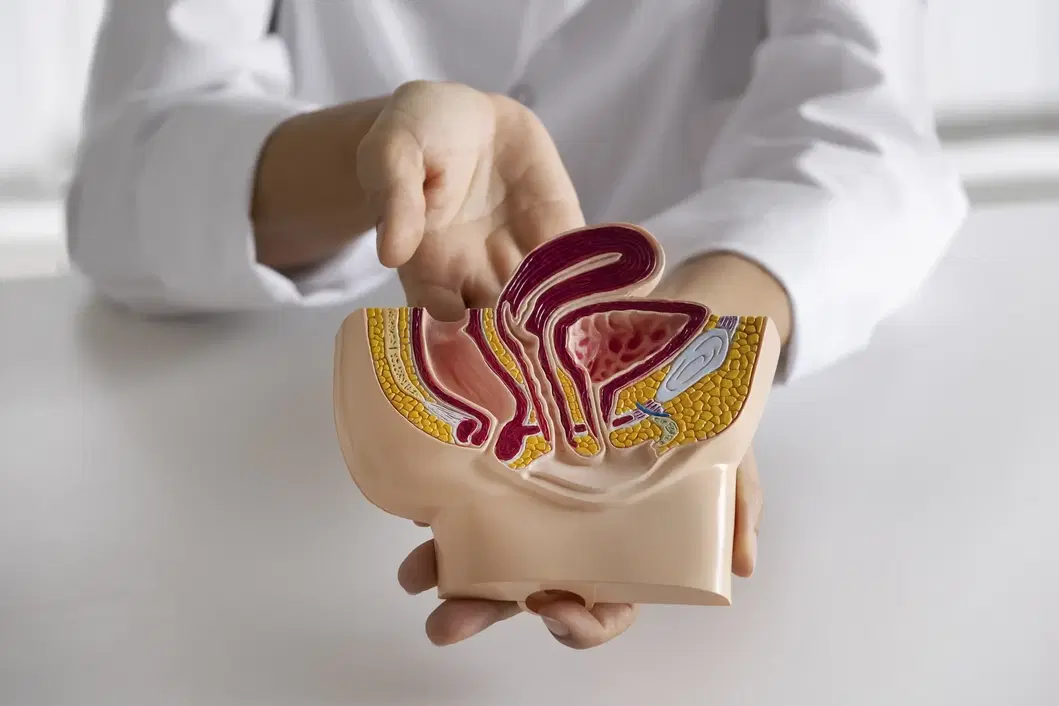
Why Should Rectal Bleeding Not Automatically Be Diagnosed as Hemorrhoids?
Rectal bleeding should not automatically be attributed to hemorrhoids because other colorectal diseases can produce the same symptom. The 2024 ASCRS hemorrhoid guideline specifically emphasizes this distinction. Possible causes include inflammatory bowel disease, diverticular disease, vascular lesions, and colorectal cancer. Evaluation should consider bleeding pattern, bowel changes, abdominal symptoms, personal history, and family history. Examination can include inspection, digital assessment, and anoscopy when appropriate. Selected patients require complete colon evaluation. Persistent bleeding after apparently successful hemorrhoid treatment also deserves further investigation rather than repeated treatment without reassessment.
How Is Hemorrhoid Treatment Chosen?
Hemorrhoid treatment is chosen according to symptoms, internal or external anatomy, prolapse, previous treatment, and examination findings. Current ASCRS guidance begins with dietary and behavioral measures for many symptomatic patients. Increasing fiber and correcting problematic bowel habits can form part of initial management. Selected internal hemorrhoids can receive office procedures, including rubber-band ligation, sclerotherapy, or infrared coagulation. Surgical hemorrhoidectomy can become appropriate for selected external or combined disease. One technique should not be marketed as appropriate for every patient. Treatment should follow the actual hemorrhoidal anatomy rather than a technology name.
How Is an Anal Fissure Different From Hemorrhoids or an Anal Fistula?
An anal fissure is a tear in the anal lining, while hemorrhoids and fistulas involve different anatomical problems. Fissures commonly cause sharp pain during or after bowel movements. Acute fissures usually begin with nonoperative treatment under current ASCRS guidance. Fiber, stool regulation, and sitz baths can form part of initial care. Chronic fissures may require topical calcium-channel blockers, nitrates, botulinum toxin, or selected surgery. Lateral internal sphincterotomy divides part of the internal sphincter in appropriate patients. Continence risk and previous sphincter injury should influence surgical selection.
Why Are an Anorectal Abscess and Anal Fistula Treated Differently?
An anorectal abscess requires control of active infection, while an anal fistula requires management of an abnormal persistent tract. ASCRS recommends prompt incision and drainage for an acute anorectal abscess. Antibiotics alone do not replace drainage in routine uncomplicated cases. Antibiotics are generally reserved for selected situations involving cellulitis, systemic infection, or immunosuppression. A fistula can remain after an abscess resolves because an abnormal channel connects the anal canal with surrounding skin. Fistula treatment then depends on tract anatomy, sphincter involvement, previous procedures, continence function, and conditions such as Crohn's disease.
When Is MRI Useful Before Anal Fistula Surgery?
MRI is particularly useful for selected recurrent, complex, occult, or Crohn's-associated anal fistulas rather than every straightforward case. ASCRS does not recommend routine imaging for every abscess or fistula. Imaging becomes more relevant when examination cannot define the disease adequately. MRI can demonstrate secondary branches, deeper abscesses, horseshoe extensions, and the relationship between fistula tracts and sphincter muscles. These details can alter operative planning. Complex fistula surgery must balance tract treatment against preservation of continence. The appropriate operation can include fistulotomy, seton drainage, LIFT, advancement procedures, or other selected approaches.
What Should International Patients Verify Before Proctology Treatment in Turkey?
International patients should verify the diagnosis, proposed procedure, regulatory status, and follow-up pathway before planned proctology treatment in Turkey.
Check the Ministry's current list of healthcare providers authorized for international health tourism.
Provide colonoscopy, MRI, pathology, previous operations, and Crohn's disease records when relevant.
Ask whether fistula surgery involves the anal sphincter and how continence risk affects planning.
Clarify whether hemorrhoid or fissure treatment is conservative, office-based, or surgical.
Arrange wound, bowel-function, recurrence, and complication follow-up after returning home.
The Ministry's provider page is dated July 28, 2026. Regulatory authorization does not guarantee individual suitability or outcomes.
Proctology in Turkey Cost 2026: What Affects the Total Cost?
Proctology in Turkey has no single 2026 cost because diagnosis and treatment requirements vary between individual patients. This page therefore provides no fixed treatment price. Costs can depend on examination, anoscopy, colonoscopy, MRI, anesthesia, pathology, and hospitalization requirements. Hemorrhoid procedures, fissure surgery, abscess drainage, and complex fistula operations use different resources. Previous anorectal surgery or Crohn's disease can also change planning. Complications and staged fistula treatment may create additional requirements. International patients should request an individualized written quotation showing included services, follow-up, and exclusions after clinical assessment.
This content provides general medical information and does not recommend a particular procedure, provider, or clinical outcome.
Last updated: August 14, 2026
Sources
https://www.ascrsu.com/ascrs/view/ASCRS-Toolkit/2851101/all/Management_of_Hemorrhoids__2024_
https://pubmed.ncbi.nlm.nih.gov/38294832/
https://www.ascrsu.com/ascrs/view/ASCRS-Toolkit/2851088/all/Management_of_Anal_Fissures__2023_
https://pubmed.ncbi.nlm.nih.gov/36321851/
https://www.ascrsu.com/ascrs/view/ASCRS-Toolkit/2851069/all/Management_of_Anorectal_Abscess__Fistula_in_Ano__and_Rectovaginal_Fistula__2022_
https://pubmed.ncbi.nlm.nih.gov/35732009/
https://fascrs.org/Web/Web/Patients/Diseases-and-Conditions/A-Z/Abscess-and-Fistula-Expanded-Information.aspx
https://konyasehir.saglik.gov.tr/TR-800708/genel-cerrahi.html
https://omerhalisdemireah.saglik.gov.tr/TR-1555012/hastanemizde-proktoloji-unitesi-hizmet-vermeye-basladi.html
https://etliksehir.saglik.gov.tr/TR-1031782/klinik-hakkinda.html
https://shgmturizmdb.saglik.gov.tr/EN-69061/authorized-healthcare-providers-and-facilitators.html
https://shgmturizmdb.saglik.gov.tr/EN-108974/regulation-on-international-health-tourism-and-tourist-health.html
https://shgmturizmdb.saglik.gov.tr/TR-117812/saglik-turizmi-yetki-belgesine-sahip-saglik-tesislerinin-dikkatine.html
https://antalyaism.saglik.gov.tr/TR-366500/saglik-hizmetlerinde-tanitim-ve-bilgilendirme--faaliyetleri-hakkinda-yonetmelik.html